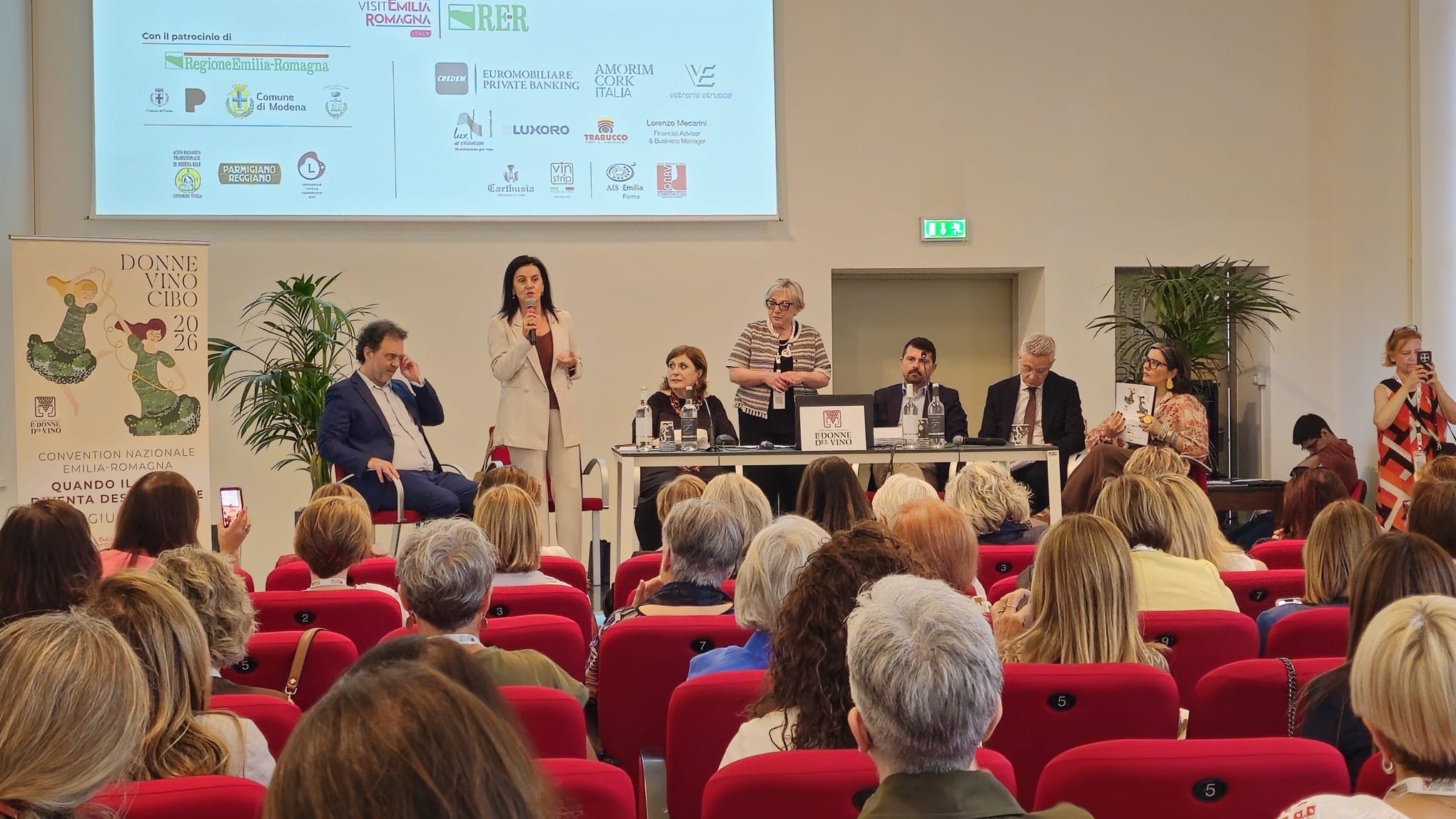

As Italian wine producers grapple with falling domestic consumption and shifting drinking habits, a proposal emerging from the annual convention of Le Donne del Vino is putting restaurants at the center of a strategy to restore value to the country’s wine sector.
Gathering in Parma this week, members of Italy’s largest association of women in wine called for a new pact between wineries and the hospitality industry, arguing that restaurant wine lists have become a critical battleground in the effort to defend regional denominations and strengthen consumer engagement with Italian wines.
The proposal goes beyond rhetoric. During the convention, Emilia-Romagna Agriculture Councillor Alessio Mammi endorsed the idea of exploring a tax credit for restaurants that prioritize wines and PDO-certified products from their own territories, a measure supporters believe could help local supply chains while encouraging more conscious consumption.
The discussion reflects growing concern across the industry. Italy remains one of the world’s leading wine-producing nations, but producers are increasingly confronting structural challenges ranging from changing consumer preferences and health-conscious lifestyles to rising international competition.
“Restaurants can become the first ambassadors of Italian wine denominations,” said Daniela Mastroberardino, president of Le Donne del Vino. “They have the ability not only to sell wine, but to communicate the identity of a territory.”
The issue is particularly sensitive for producers who argue that wine lists in many restaurants have become increasingly detached from local production, often favoring internationally recognized labels at the expense of lesser-known regional appellations.
For advocates of the proposal, reconnecting wine lists with local terroirs could generate benefits extending well beyond the glass. Wine tourism, gastronomic tourism and geographical indications are increasingly viewed as interconnected assets capable of driving economic development in rural areas.
That broader vision was a recurring theme throughout the convention. Speakers repeatedly described appellations not simply as regulatory tools but as cultural and economic infrastructures that preserve landscapes, traditions and local communities.
The debate comes at a time when Italy is seeking to strengthen the international positioning of its food and wine heritage. Participants pointed to the recent UNESCO recognition of Italian cuisine as an opportunity to reinforce the narrative linking wine, gastronomy and tourism, particularly in regions where protected designations play a central role in local economies.
Alongside market concerns, the convention also highlighted another challenge facing Italian producers: the persistence of food and wine counterfeiting abroad.
Stefano Vaccari, a member of the Italian Parliament’s Agriculture Committee, warned that the phenomenon known as “Italian Sounding” continues to undermine authentic Italian products in international markets. According to figures cited during the event, products falsely evoking Italian origins generate tens of billions of euros in lost opportunities for legitimate producers every year.
Vaccari announced that Parliament’s Commission on Environmental Crime is expected to present a dedicated report on food counterfeiting and Italian Sounding by 2026, with recommendations expected to focus on stronger traceability requirements and the adoption of digital product passports.
While policy discussions dominated the agenda, the convention also served as a showcase for Emilia-Romagna’s food and wine heritage. Delegates travelled across the region, visiting Lambrusco producers, Parmigiano Reggiano dairies, traditional balsamic vinegar makers and wineries dedicated to preserving native grape varieties.
Yet beyond the tastings and masterclasses, the central message from Parma was clear: in a market facing profound change, Italian wine producers believe the future success of their denominations will depend as much on how wines are presented and communicated as on how they are made.
For Le Donne del Vino, whose recent Women Wine Days initiative was centered on “Women, Wine, Food”, that effort begins at the restaurant table.
