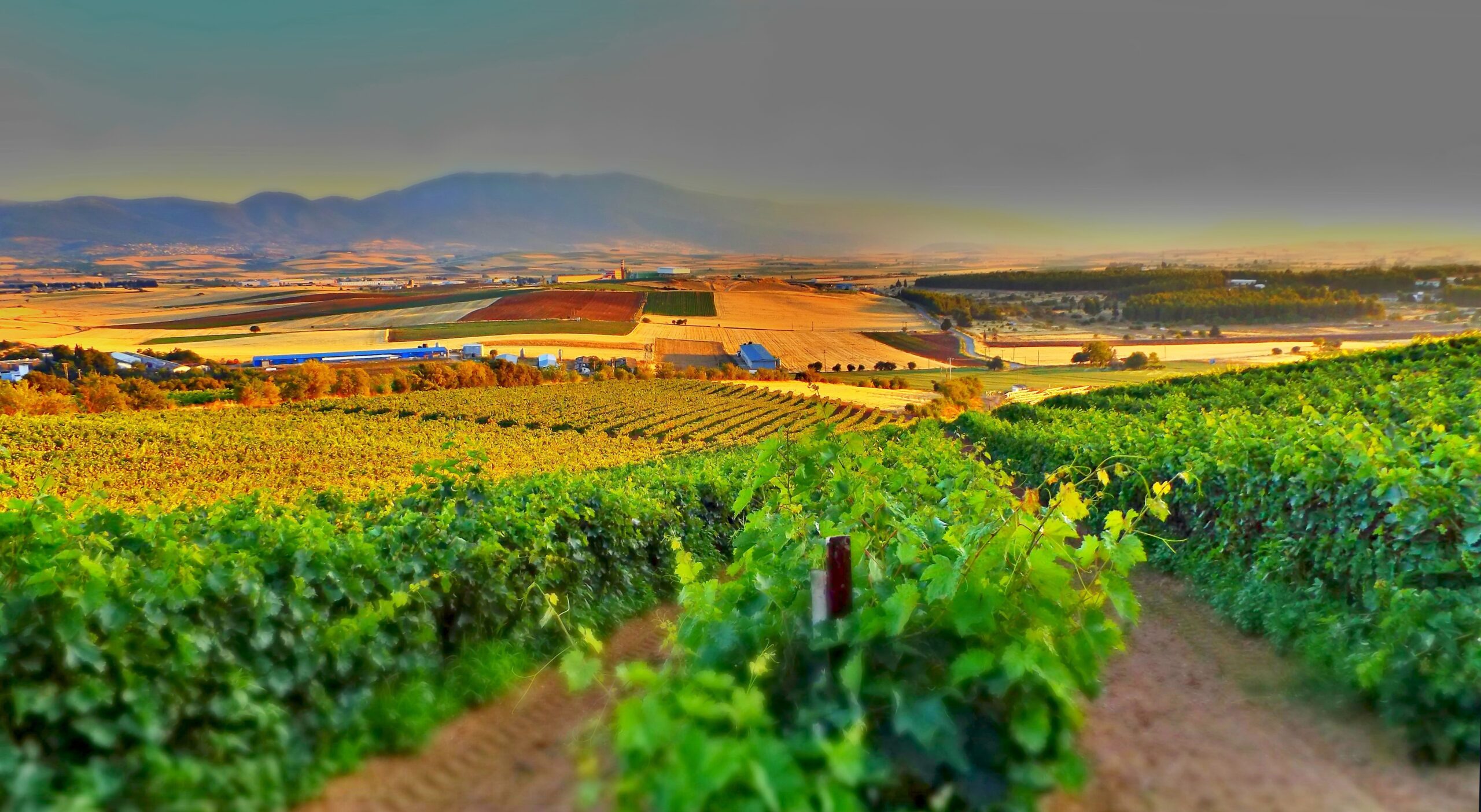

Ask most wine drinkers outside Italy to name a Sicilian white grape and you’ll hear Grillo, maybe Zibibbo if they’re feeling adventurous. Almost nobody says Catarratto. Which is strange, because it’s the grape actually growing on the island in the greatest quantity, and it has been for longer than most of us have been drinking wine at all.
The grape everyone drank without knowing it
Records of Catarratto go back to the sixteenth century, when literary sources already describe it spreading across the island. For most of its history it did an unglamorous job: producing generous, reliable yields for everyday drinking and for Marsala, the fortified wine that made Sicily famous long before anyone talked about “orange wine” or single-vineyard bottlings. Farmers liked it because it shrugged off drought and resisted the diseases that plague more delicate varieties. That toughness kept it in the ground through decades when fashion moved on to other things.
The numbers tell their own story of rise and fall. In the 1990s, around 90,000 hectares of Sicily were planted with Catarratto. Today that figure sits closer to 28,000 to 29,000 hectares, still enough to make it the third or fourth most planted white grape in Italy, and still present in the production rules of most Sicilian DOCs. The decline wasn’t really about quality. It was about an industry pulling out bulk vineyards as the market for cheap, anonymous white wine shrank, and Catarratto happened to be the grape most associated with that old model.
A new generation is rewriting the story
What’s changing now isn’t the grape. It’s who’s paying attention to it. A handful of producers, some of them working with careful, non-invasive winemaking and organic farming, have started treating Catarratto the way growers elsewhere treat their heritage varieties: as something worth slowing down for. Lower yields, hand-picked fruit, cooler fermentations. The results are wines with real freshness and a saline, mineral edge that nobody would have associated with Catarratto twenty years ago.
That shift found a very public stage this June, when the Associazione Regionale del Catarratto Autentico, ARCA, held the first Festa del Catarratto in Santa Cristina Gela, a small town near Palermo with deep roots in the local Arbëreshë community. Six founding wineries, Bagliesi, Caruso & Minini, Castellucci Miano, Di Bella, Feudo Disisa and Tenute Lombardo, farm a combined 80 hectares of Catarratto between them, with the potential to produce around 7,000 hectolitres. Modest numbers next to the grape’s total footprint, but that’s rather the point: this is a project about identity, not volume.
Thirteen wineries poured at the tasting, more than half of them from the DOC Monreale zone, alongside nine local producers of cheese, honey and other regional food. A masterclass led by Othmar Kiem, director of Falstaff Italia, together with winemaker Tonino Guzzo, walked the audience through the different expressions the grape can take. ARCA president Sebastiano Di Bella put it simply when he described Catarratto’s appeal as resting on a rare balance: an old, resilient vine now showing a genuinely contemporary side.
Why Monreale matters here
If there’s one place putting Catarratto’s new identity into focus, it’s Monreale, the hill town above Palermo better known for its cathedral mosaics than its wine. DOC Monreale is tiny by Sicilian standards, but it has recently narrowed its own rules to foreground Catarratto alongside Perricone and Syrah, dropping international varieties from its core identity. High-altitude vineyards, some climbing past 900 metres, give the grape the kind of diurnal swing that keeps acidity intact even through a hot Sicilian summer. It’s a small territory making a deliberate bet on doing one thing precisely rather than many things adequately.
Three reasons this isn’t just a nostalgia trip
What makes Catarratto’s comeback feel different from the usual “forgotten grape rediscovered” story is that three separate forces happen to be pulling in the same direction at once. The vine itself shrugs off drought, heat and disease better than most of its neighbours, which matters enormously as Sicilian summers get harder to farm through. It turns out to be genuinely versatile in the cellar, capable of everything from taut Metodo Classico to structured, age-worthy still whites that speak clearly of where they were grown. And the global market, increasingly tired of oak and alcohol for their own sake, has started asking for exactly what Catarratto does naturally: freshness, texture, a wine with a spine. None of these three things would be enough on its own to change a grape’s reputation. Together, they’re turning what was once Sicily’s highest-volume workhorse into one of its more strategic bets for the future.
Worth seeking out
None of this makes Catarratto an overnight sensation, and it shouldn’t. Its whole appeal is that it isn’t chasing a trend so much as finally being allowed to show what it can do when someone farms it with intention. If you come across a bottle labelled DOC Monreale, or one from any of the ARCA producers, it’s worth a try. What you’ll find in the glass is a grape quietly proving that Sicily’s most planted white was never really a workhorse. It was just waiting for someone to look at it properly.
